


Chinoiserie Guide: Everything You Need to Know About Chinoiserie
Few styles of home decor have stood the test of time with as much grace, elegance, and mystery as chinoiserie. Chinoiserie is a beautiful mix of Eastern styles seen through Western eyes. It is still popular in interior design, from fancy estate homes to modern apartments that want an artistic touch.
This chinoiserie guide will tell you everything you need to know about this famous style of design, including where it came from, what its main features are, and how to use it in your own home, especially if you want to strike a balance between old and new.

What Is Chinoiserie? A Blend of Cultures Through Design
The word "chinoiserie," pronounced as: "shin-wahz-ree," comes from the French word chinois, which means "Chinese" or "in the Chinese style." This style doesn't come from Asia itself; instead, it's how Europeans see East Asian art, design, and culture. The chinoiserie style started in the 17th century, when trade between Europe and Asia grew. It was very popular among the wealthy in France and England during the Rococo period.
Chinoiserie design takes ideas from Chinese, Japanese, and other East Asian cultures, but at its core, it is a Western fantasy of the East.
Because of this, there is a dreamlike, richly decorated style with dragons, pagodas, phoenixes, gardens, flowers, and animals that represent different cultures, all reimagined through European craftsmanship.

A Brief History: Where Did Chinoiserie Come From?
Europe was most interested in the "mysterious East" in the 17th and 18th centuries, which is when chinoiserie architecture and decor got their start. Chinese porcelain, lacquerware, tea, silk, and art that came to the United States at this time started a design movement that romanticized Asian art and way of life.

It wasn't always true that this fascinated people. Because, to be honest, it was often based on imagination rather than knowledge of the culture. On the other hand, it created a whole new style of design that mixed East Asian patterns with baroque and rococo styles from Europe.
European kings and queens, like Louis XV of France and George IV of England, were known to have chinoiserie rooms built into their palaces. Chinese-style garden pavilions, tea ceremonies, and imported porcelain all became signs of wealth and sophistication, making chinoiserie even more of a high-status art style.
Defining Characteristics of Chinoiserie Style
To understand what chinoiserie is, you have to look at the way it is used visually. You'll notice the same set of themes and elements whether you're looking at chinoiserie wallpaper or furniture:
1. Nature Motifs and Scenery
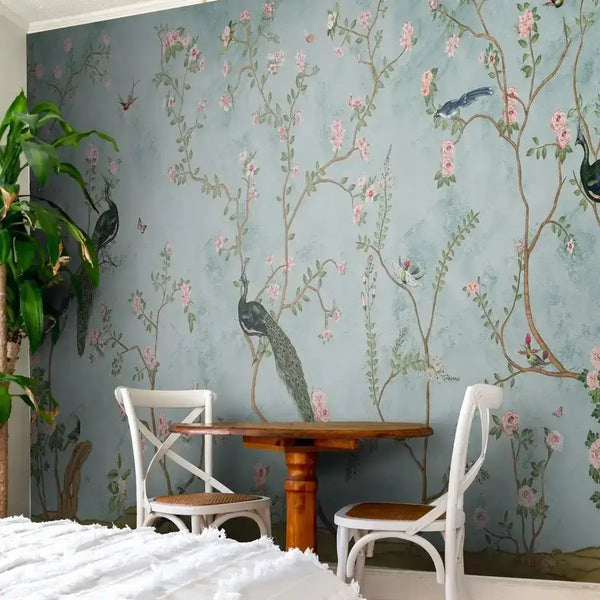
The main themes in chinoiserie interior design are gardens, birds, monkeys, bamboo forests, and water scenes. These parts look like hand-painted Chinese silk screens and make you think of peace and natural beauty.

2. Architectural Elements
In chinoiserie art, pagodas, bridges, and temple-like buildings are often shown or used as inspiration for the shapes of furniture legs, lanterns, and fretwork patterns.
3. Mythical Creatures
Dragons, phoenixes, and foo dogs (guardian lions) show up a lot. These creatures have symbolic meanings, such as strength, protection, and good luck, and they have been used in Western art.
4. Porcelain and Ceramics
During the Ming dynasty, blue-and-white chinoiserie porcelain became famous and was sent all over the world. It is still one of the most recognizable elements of Chinese art and can be found on ginger jars, vases, and dishes.

5. Lacquered Surfaces and Gilded Accents
Chineserie furniture uses traditional Asian lacquer techniques and often adds gold-leaf finishes and intricate carvings to make it look more expensive.
Chinoiserie in Interior Design: A Timeless Style
Why Is Chinoiserie Still Relevant?
The timeless appeal of chinoiserie interior design comes from the fact that it can be used in many ways and looks beautiful. Even though it has historical roots, it fits in well with both old and new homes. Chinoiserie accents are often used by designers like Bunny Williams, Michael Smith, and Miles Redd to give rooms drama, color, and a classic look.
From modern apartments with clean lines to grand homes with a vintage look, chinoiserie decor adds culture, story, and visual depth.

How to Incorporate Chinoiserie Into Your Home
Here are some useful tips on how to add chinoiserie decor to different rooms in your house. These methods give you options, whether you want to make a strong statement or a subtle nod:
Chinoiserie Wallpaper: A Bold Statement
Putting up chinoiserie wallpaper can make a room into a story space. Wall coverings like these are often hand-painted or digitally printed to look like silk. They have scenes of plants, birds, and gardens. They look great in powder rooms, foyers, or dining rooms where adding drama to the room is important.

Chinoiserie Artwork: Elegance Without Commitment
If full wallpaper is too much for you, framed chinoiserie prints or paintings are a great alternative. These pieces, which usually show nature scenes or imperial themes, can be switched out with the seasons or used to hold up gallery walls.
Chinoiserie Furniture: Craftsmanship Meets Culture
Usually, chinoiserie furniture combines European rococo shapes with decorations that look like they came from Asia. You can expect to see lacquer finishes, legs that look like bamboo, or painted panels with lots of small details. Sideboards, armoires, coffee tables, and mirrors are all in this group.
Blue and White Porcelain: An Iconic Accent
Blue-and-white ceramic pieces are a must-have for any modern chinoiserie-style home decor. Whether you choose lamps, ginger jars, teapots, vases, or teapots, these classic pieces make a clean contrast and look great grouped together on mantels or consoles.

Chinoiserie Textiles and Soft Furnishings
Use pillows, curtains, or bedding with Asian designs to add the style without drawing too much attention to it. For a soft, luxurious feel that still has a hint of chinoiserie, choose silks or linens that are printed with pagodas, koi fish, cherry blossoms, or cranes.
Modern Chinoiserie: East Meets West in Contemporary Homes
You don't have to use only traditional elements in modern chinoiserie design. A lot of people mix chinoiserie elements with modern shapes, neutral colors, and sleek lighting.
As an example:
- Pair a minimalist velvet sofa with chinoiserie wallpaper
- Hang a lacquered mirror in a white-walled hallway
- Mix traditional blue-and-white vases with Scandinavian furnishings
This contrast creates a fresh, eclectic aesthetic that feels both curated and personal.

The Role of Chinoiserie in Indian Homes
Even though chinoiserie comes from Europe, it fits in well with Indian homes that already value bright colors, intricate details, and telling stories through art. It makes sense to use chinoiserie in Indian interiors, especially those with heritage architecture or fusion styles.
For a space that feels like it comes from all over the world, add chinoiserie wallpaper to heritage-style apartments, use porcelain ginger jars in modern condos in Mumbai, or bring chinoiserie furniture into villas in Goa.
Chinoiserie Furniture and Materials: A Masterclass in Detail
Lacquerware and Carved Wood
Asian lacquerware techniques go back thousands of years and use many layers of tree sap that are carefully polished to a high shine. These methods are now used to make chinoiserie furniture like cabinets, screens, and chairs, which are often decorated with hand-painted flowers, cranes, or gold inlay.
Faux Bamboo and Fretwork
In chinoiserie rooms, you can often find fake bamboo furniture that has been painted in bright colors like red, black, or jade green. Mirrors, side tables, and shelving units all have fretwork designs that are based on the complicated lattice patterns found on traditional Chinese screens.

The Most Iconic Chinoiserie Motifs (Explained)
- Foo Dogs: These guardian lion statues symbolize protection. Commonly seen in pairs, they balance yin and yang energies.
- Pagodas: Inspired by Buddhist temples, they represent peace, harmony, and enlightenment.
- Dragons: Emblems of power and luck, dragons appear in everything from wallpaper to ceramics.
- Floral Vignettes: These mimic nature in a stylized way and appear frequently on screens, fabrics, and porcelain.
FAQs About Chinoiserie
What is a chinoiserie?
Chinoiserie is a decorative style that originated in Europe, inspired by the art and design of East Asia. It includes visual elements like dragons, pagodas, florals, and porcelain, and appears in furniture, wallpaper, ceramics, and home décor.
How do I identify chinoiserie?
Look for scenes of nature, mythical animals, and architectural motifs painted or printed in a stylized manner. Blue-and-white porcelain, lacquered furniture, and fretwork details are all typical indicators.
Is chinoiserie the same as Chinese décor?
No. While chinoiserie is inspired by Chinese and East Asian art, it is a European interpretation and not an authentic Asian style. It’s more of a stylized fantasy than a cultural representation.
Can chinoiserie work in a modern home?
Absolutely. Modern chinoiserie interior design is about mixing traditional motifs with contemporary elements to create contrast and visual depth. The key is balance; use chinoiserie as an accent, not an overload.

Final Thoughts: Why Chinoiserie Will Never Go Out of Style
Today's globalized design world mixes styles from different eras and countries.
However, chinoiserie is still popular because it tells a story, which is something that not many styles can do.
You can feel fantasy, travel, history, and skill all at once when you look at it.
You can use chinoiserie to make your home unique and beautiful in a lot of different ways, whether you're going for a maximalist sitting room or just want to add a touch of vintage charm to a neutral room.
And that's what makes chinoiserie classic in the world of well-thought-out, classy, and carefully chosen interiors.