


How to Choose the Perfect Dining Room Rug for Any Table
It's not just about style when choosing a dining room rug; it's also about balance, proportion, comfort, and usefulness. Whether you want a wool rug under the table, a hand-tufted beauty, or an easy-to-clean flatweave, knowing how to size and place your rug will help your dining room look great.
This book tells you everything you need to know about rugs, including what sizes work best for different tables and the best materials for places with a lot of foot traffic.

Why Does Rug Size Matter in a Dining Room?
A dining room rug outlines the area where you will be eating, makes the floor more comfortable to walk on, and keeps chairs from scratching it. But if the rug is too small, the room looks and feels squished and off. If it's too big, it might take up too much room or get in the way. The goal is to find a rug that fits around your table and gives your chairs enough room to move around.
How Big Should a Dining Room Rug Be?
A dining room rug should extend at least 24 inches beyond every edge of your dining table. This ensures chairs remain fully on the rug even when pulled back. For example, if you have a 36-inch-wide table, the rug should be no less than 84 inches wide (36 + 24 + 24).
Key Sizing Formula:
-
Table length + 24 in + 24 in = Rug length
-
Table width + 24 in + 24 in = Rug width
Round tables work similarly: measure the table diameter and add at least 48 inches to get the rug diameter.
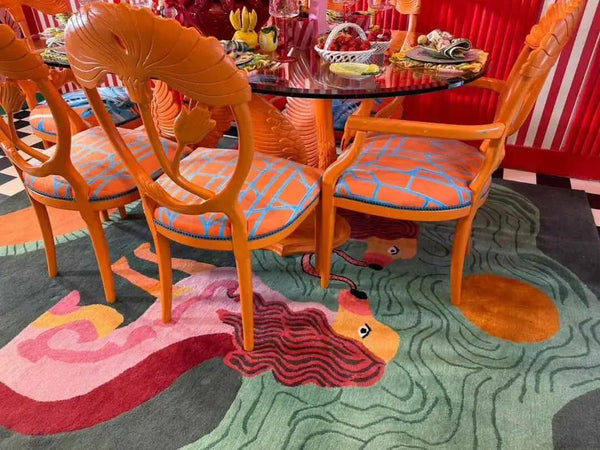
What Size Rug for a Dining Room Table?
The right rug size depends on the table shape:
For Rectangular Tables
-
A 6-seat table (about 72 inches long) typically needs an 8×10 foot rug.
-
An 8-seat table (about 96 inches long) usually fits best on a 9×12 foot rug.
For Round Tables
-
A 48-inch round table looks balanced on an 8-foot round rug.
-
Larger tables (60 inches or more) work well with 9-foot round or square rugs.
For Oval Tables
-
Choose an oval rug or a large rectangular rug that mirrors the table’s footprint. A 9×12 rug is often ideal for a medium-sized oval table.
Best Materials: Wool Rugs and Hand-Tufted Rugs
When selecting a dining table rug, durability matters as much as design. Food spills, chair movement, and heavy traffic demand robust fibers.
-
Wool rugs under dining tables: Naturally resilient, stain-resistant, and easy to clean. Wool fibers bounce back after compression, keeping rugs looking plush.
-
Hand-tufted rugs: Offer high-end looks at accessible prices. They are softer than flatweaves and come in limitless patterns to complement any dining room.
-
Natural fiber rugs (jute, sisal): Earthy and textured, though less forgiving with stains.
-
Indoor-outdoor rugs: Great for kitchens or breakfast nooks since they’re easy to hose off.

Dining Room Rug Ideas by Table Shape
Rug Under a Round Table
A round rug under a round dining table creates symmetry. Make sure the rug is at least 4 feet wider than the table’s diameter to accommodate chairs.
Rug Under an Oval Table
An oval rug is ideal, but a large rectangular rug also works. Look for soft edges and patterns that flow naturally with the table shape.
Rugs for Under a Kitchen Table
If your dining area doubles as a kitchen space, select a flatweave or low-pile rug that resists crumbs and cleans easily.
Dining Room Rug Placement: Common Mistakes to Avoid
-
Rug too small: Chairs slide off the rug, causing imbalance.
-
Blocking air vents or doors: Always check floor layout first.
-
Ignoring pile height: High-pile rugs can make chairs wobble or feel uneven.
-
Forgetting the rug pad: A non-slip pad protects floors and keeps the rug secure.
Dining Room Rug Ideas for Style
-
Patterned rugs hide spills better than solids.
-
Neutral tones complement bold dining chairs.
-
Geometric hand-tufted rugs bring modern energy to minimalist spaces.
-
Traditional wool rugs add warmth to formal dining rooms.
A rug anchors your dining table visually, so consider it as part of your decor plan — not an afterthought.
FAQs About Dining Room Rug Sizes
How big should a dining room rug be?
It should extend at least 24 inches past each side of the table so chairs remain fully on the rug when pulled out.
What size rug for a dining room table?
For a standard 6-seat table, go for an 8×10 rug. For an 8-seat table, choose a 9×12 rug. Round tables need rugs at least 4 feet wider than the table diameter.
How to size a dining room rug quickly?
Measure your dining table and add 48 inches to both length and width. That’s your minimum rug size.
What’s the best rug material for dining rooms?
Wool rugs and hand-tufted rugs are excellent because they’re durable, soft, and easy to clean. Flatweaves are practical for casual dining and kitchen areas.
How much bigger should a rug be than a dining table?
At least 2 feet on all sides to allow space for chairs to slide out without catching the rug edge.

Final Thoughts
A well-sized dining room rug ties the whole room together, offering visual cohesion and practical comfort. Whether you prefer classic wool rugs under your dining table or a bold hand-tufted rug for a contemporary look, focus on proportion, durability, and style. Measure carefully, allow extra room for chairs, and pick a material that matches your lifestyle.
With these guidelines, you’ll find a dining table rug size that makes your room feel balanced, polished, and inviting.
Share